
Work, caring responsibilities or other pressures can occupy you long after the immediate task is over. You may feel tired and tense, yet find yourself replaying conversations, checking messages or planning what needs doing next.
I’m Adrian Tannock, a CNHC-registered hypnotherapist based in Manchester city centre. Since 2005, I have helped adults with stress, overthinking, sleep difficulties and emotional overload. Sessions are available at my Deansgate office and online.

CNHC registered · Senior member of the General Hypnotherapy Register · Practising hypnotherapy in Manchester since 2005 · Private office on Deansgate · Registered and insured to practise
Stress, Sleep Problems, Overthinking and Physical Tension
You may recognise:
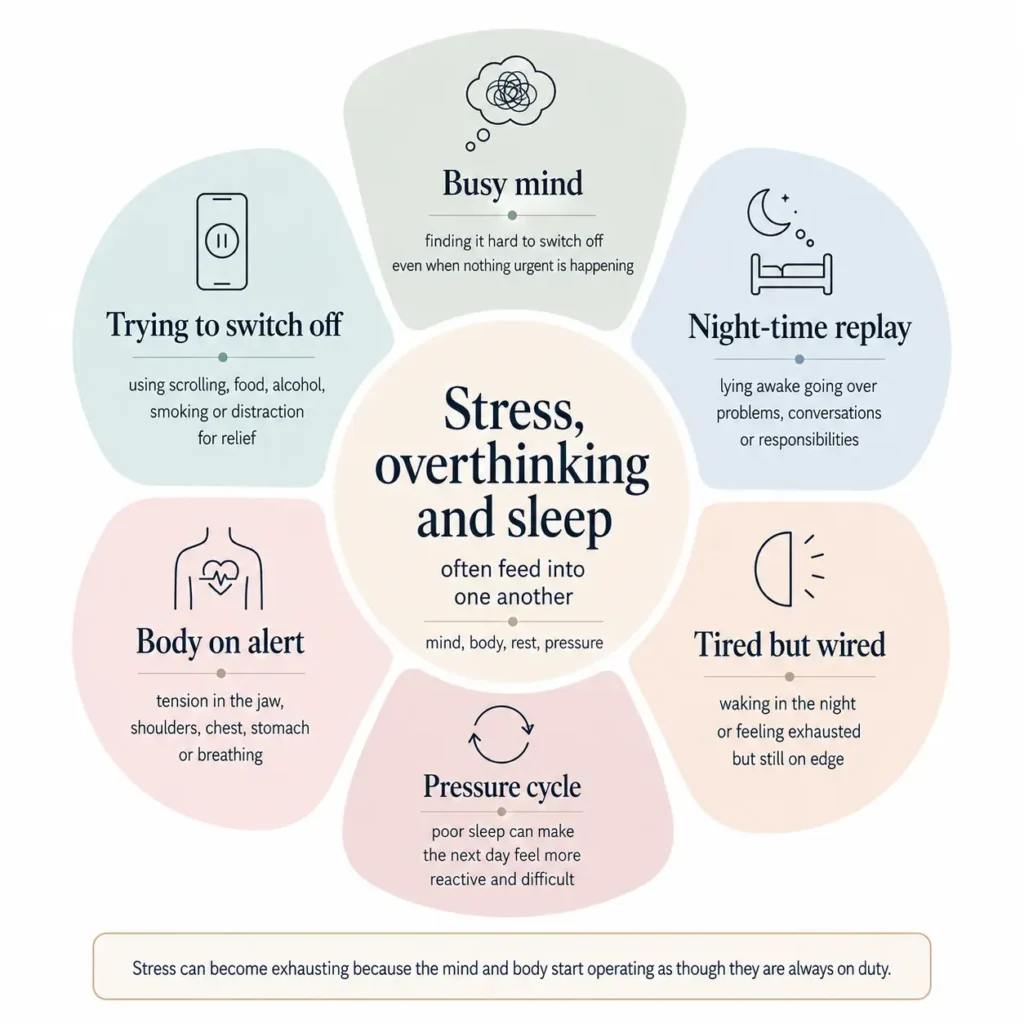
- finding it difficult to switch off, even when nothing needs immediate attention
- lying awake thinking about problems or waking in the night and starting to plan
- feeling tired but wired
- tension in your jaw or shoulders, clenching your jaw or grinding your teeth
- feeling irritable, impatient, tearful or easily overwhelmed
- struggling to rest because there always seems to be something else to do
- turning to food, alcohol, scrolling, smoking or more work for a break from how you feel.
You may also be worrying that you should be coping better, while continuing to meet demands that leave little time for yourself.
When Stress, Sleep, and Overthinking Become Linked
A demanding day can follow you into bed as planning, replaying or worry. A poor night may then leave you with less energy and patience for the next day’s demands.
You may also begin worrying about another bad night, so bedtime itself starts to feel pressured.
Sleep difficulties can have several causes. Where stress and overthinking are part of the picture, we would look at how they affect your evenings, nights and ability to recover.
Common Patterns This Page Connects With
This page covers stress, sleep difficulties and overthinking. Related concerns include:
- work-based stress
- insomnia and difficulty sleeping
- overthinking and catastrophising
- anxiety and worry
- procrastination and avoidance
- bruxism, jaw tension, and teeth grinding
- obsessive thoughts and anxiety patterns.
These difficulties can overlap, but symptoms such as jaw pain, tooth damage or persistent sleep problems may also need dental or medical assessment. We would take those needs into account when discussing the support I offer.
How Stress Can Keep Itself Going
Under pressure, you may push through tiredness, keep checking or put rest off until everything is finished. These responses may help you meet a demand in the moment, while leaving less opportunity to recover.
We would look at how much is being asked of you, what support you have and which responsibilities can realistically be reviewed. We can also examine habits that keep work or worry intruding into time you meant to use elsewhere.
The Problem with Trying to Solve Everything in Your Head
Thinking can feel like part of being responsible. You may keep rehearsing a conversation, revisiting a decision or trying to work out every possible problem before you stop.
Sometimes this leads to a useful plan. At other times, you return to the same questions without gaining new information or being able to act.
We may look at which problems can be acted on, which require help or negotiation, and which cannot be resolved at that moment. This can give us a clearer basis for deciding what deserves your attention and when to leave something for another time.
How Hypnotherapy May Help with Stress, Sleep, and Overthinking
We agree on what you want to be different, such as being able to stop work at an agreed time, rest more easily or spend less time caught in repetitive thinking.
During hypnosis, we may practise settling physical tension or rehearse a situation that usually leaves you feeling overloaded. This might include responding to a demand, finishing the day or leaving an agreed task for another time.
My approach draws on Acceptance and Commitment Therapy (ACT). We may practise noticing a thought such as “I need to solve this now” and deciding what response is useful in that moment. You can read more on my Acceptance and Commitment Therapy in Manchester page.
Around sleep, we may explore how you respond to unfinished business, worry or the pressure to fall asleep. We may also work on easing the demands you place on yourself at bedtime.
Where useful, we agree something to try between sessions, then review how it fitted your circumstances and what still needs attention.
A Brief Example of How the Work May Unfold
As an illustration, someone might check work messages throughout the evening because leaving tasks unfinished feels irresponsible. By bedtime, they are mentally rehearsing the next day and finding it hard to rest.
We might clarify what their role requires, identify what can reasonably wait and agree a way to record outstanding tasks. In hypnosis, we may rehearse ending the working day and responding to the urge to check again.
We would review how the changes worked, whether the demands on them left enough time for recovery and what further support might be needed.
When This Approach May Be a Good Fit
I work with adults seeking help with stress, sleep difficulties or overthinking, including where these are linked with work pressure, perfectionism, people-pleasing, avoidance or self-criticism.
You may feel tense, tired or mentally busy without having a clear explanation for what is happening. We can use specific examples from your day to begin understanding it.
During the consultation, we can discuss what you want help with, whether this approach seems suitable and whether other care is needed.
When to Seek Additional or Medical Support
Hypnotherapy is not a substitute for urgent or necessary medical or mental health care.
If your sleep difficulties are severe, sudden, persistent, medically unexplained, or linked with pain, breathing problems, medication, trauma, depression, menopause, alcohol use or other health concerns, speak with your GP or another appropriate healthcare professional.
For jaw pain, tooth damage, suspected teeth grinding or headaches that may be related to your jaw, speak with a dentist. Dental assessment remains important where teeth, jaw or related pain symptoms are involved.
If intrusive thoughts, compulsions or other symptoms are causing severe distress or feel unmanageable, seek appropriate mental health support. Thoughts of harming yourself also need appropriate support. If you feel at risk or need urgent help, use NHS urgent services or emergency support.
We can discuss whether hypnotherapy may be useful alongside other care you are receiving.
What to Expect Next
During the consultation, we talk about how stress, sleep or overthinking affect you, what you have tried and what you would like to change. I will explain how I may be able to help and answer your questions.
There is no obligation to continue, and you can take time afterwards to decide.
You can read more about the process on my page about What to Expect from Hypnotherapy.
Contact me
Please use this form for general enquiries. I will use the details you provide to respond to your enquiry in line with my Privacy Policy. This form is not monitored for urgent or crisis support. If you are in immediate danger, call 999 or go to A&E.
Arrange a Consultation
To discuss whether hypnotherapy for stress in Manchester may be suitable for you, use the contact form or call me on 07790 506375.
The consultation is free and lasts up to 60 minutes. It can take place online or at my private Manchester city centre office on Deansgate.